
The Development of Halal Certification in Brazil and Opportunities for Export Markets
Though the Muslim population of South America is relatively small - less than 1% of the population in most countries - this region is a powerhouse in Halal meat and poultry exports. Brazil is the world’s largest beef producer, with 20% of global production totaling 12.35 million metric tons in the 2025/2026 market year. Brazil also ranks number three in chicken production, with 15.45 million metric tons accounting for 14% of the 2025/2026 global production. Already a major agricultural exporter, Brazil figured out how to tap into the unmet demand for Halal products in the early 1980s, and is now a leading supplier for overseas markets, serving Halal consumers in nations around the world with trusted Halal meat and other products worth well over $20 billion.
To understand what has made Brazil so successful as a Halal meat and poultry exporter, we spoke with Dr. Soha Chabrawi, who manages technical and religious quality for the FAMBRAS (Federation of Muslim Associations of Brazil) Halal division. Dr. Chabrawi holds a PhD in Neuroscience and Cognition, and has worked with FAMBRAS for nine years.
Brazil became a large Halal meat exporter thanks to FAMBRAS, which began certifying and exporting Halal poultry to Egypt in 1979. At that time, nothing existed to meet international demand for Halal-certified products, so the head of FAMBRAS united three companies. Over forty years later, FAMBRAS remains the only entity currently certifying Brazilian meat exporters. Their client list of meat and other food producers totals over 300 and continues to grow. FAMBRAS certifies everything from very small to very large companies, with strict standards applying across the board. What matters, Dr. Chabrawi explained, is whether the company is able to meet all requirements to prevent cross-contamination with non-Halal meat, as well as adhere to all the associated technical, quality, and religious standards.
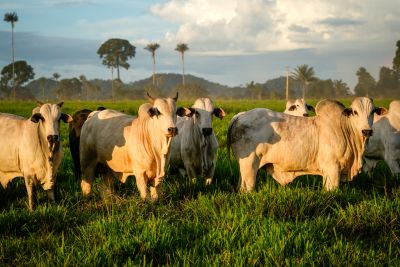
Many of the slaughterhouses certified by FAMBRAS meet the strict standards required to export to Indonesia and Malaysia, large markets with famously strict regulations. As the world’s largest importer of Halal meat, Indonesia is an essential market and a major destination for the products of FAMBRAS’s clients.
The outlook is good for the future of the Brazilian Halal meat industry. Exports have been increasing, especially because FAMBRAS highlights their strict adherence to standards, which represent a commitment to consumers around the world. Dr. Chabrawi noted that demand is increasing from countries like China and Japan that don’t have large Muslim populations, because consumers understand that Halal certification is not just about spiritual guidelines, but about product quality and ethical slaughter practices.

In conducting Halal certification audits, FAMBRAS experts look at religious standards as well as good manufacturing practices, food safety, and product quality.
ISA has noted similar trends in demand for Halal products in the United States and Canada, where consumers appreciate an additional layer of quality control and assurance. The Brazilian Halal industry also benefits from the country’s large size, with many potential beef and poultry producers interested in Halal certification.